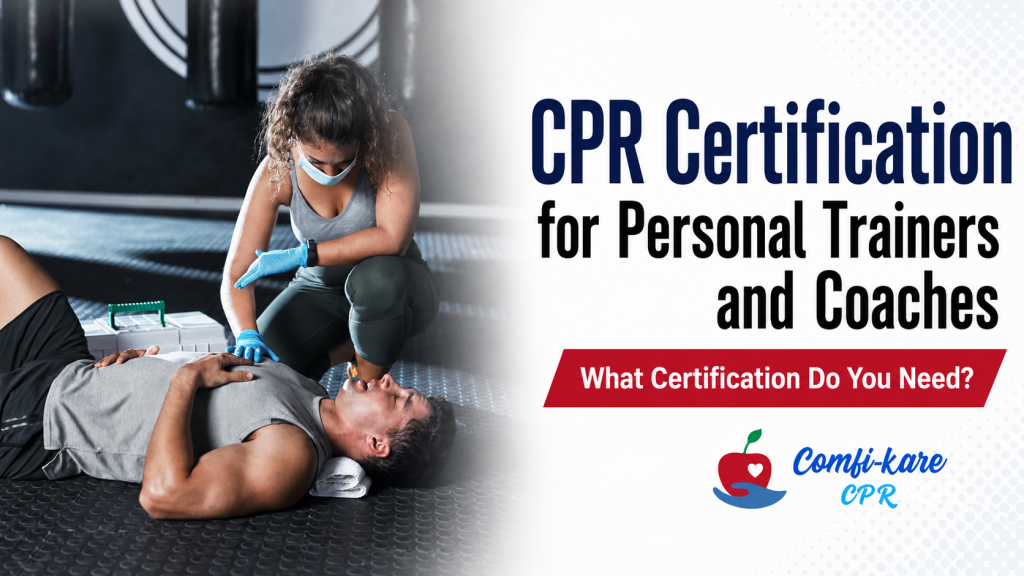
Personal trainers and coaches work with people while they are physically active—often in gyms, studios, sports facilities, schools, and outdoor environments. That makes knowing how to respond to a cardiac emergency especially valuable.
For many fitness professionals, CPR training is also more than a useful skill. Employers and professional certification organizations may require trainers to maintain a current CPR/AED credential.
For example, NASM currently requires candidates taking its Certified Personal Trainer exam to hold valid CPR and AED certification.
But what type of CPR certification for personal trainers should you take? Do you need CPR/AED, First Aid, or healthcare-provider BLS?
The answer depends on your employer, professional certification organization, work setting, and responsibilities.
Do Personal Trainers Need CPR Certification?
There is an important difference between a general legal requirement and a professional requirement.
Personal trainers are not all governed by one universal CPR rule. However, gyms, fitness centers, employers, insurance requirements, and professional certification organizations may require CPR/AED certification.
That means the safest approach is to confirm the exact credential required before registering for a class.
If you are pursuing a professional fitness certification, check its current prerequisites. If you are already employed, ask your gym or fitness facility which certification provider and course level it accepts.
If you are still comparing classes, Comfi-Kare’s guide on how to choose the right CPR training explains what to check before paying for a course.
What CPR Certification Does a Personal Trainer Need?
For many personal trainers, a CPR course that includes CPR and AED skills is the most relevant starting point.
That is because trainers need to understand not only how to perform CPR but also how to recognize an emergency and use an Automated External Defibrillator.
Depending on your job, you may also need First Aid.
A typical fitness professional may consider:
CPR/AED
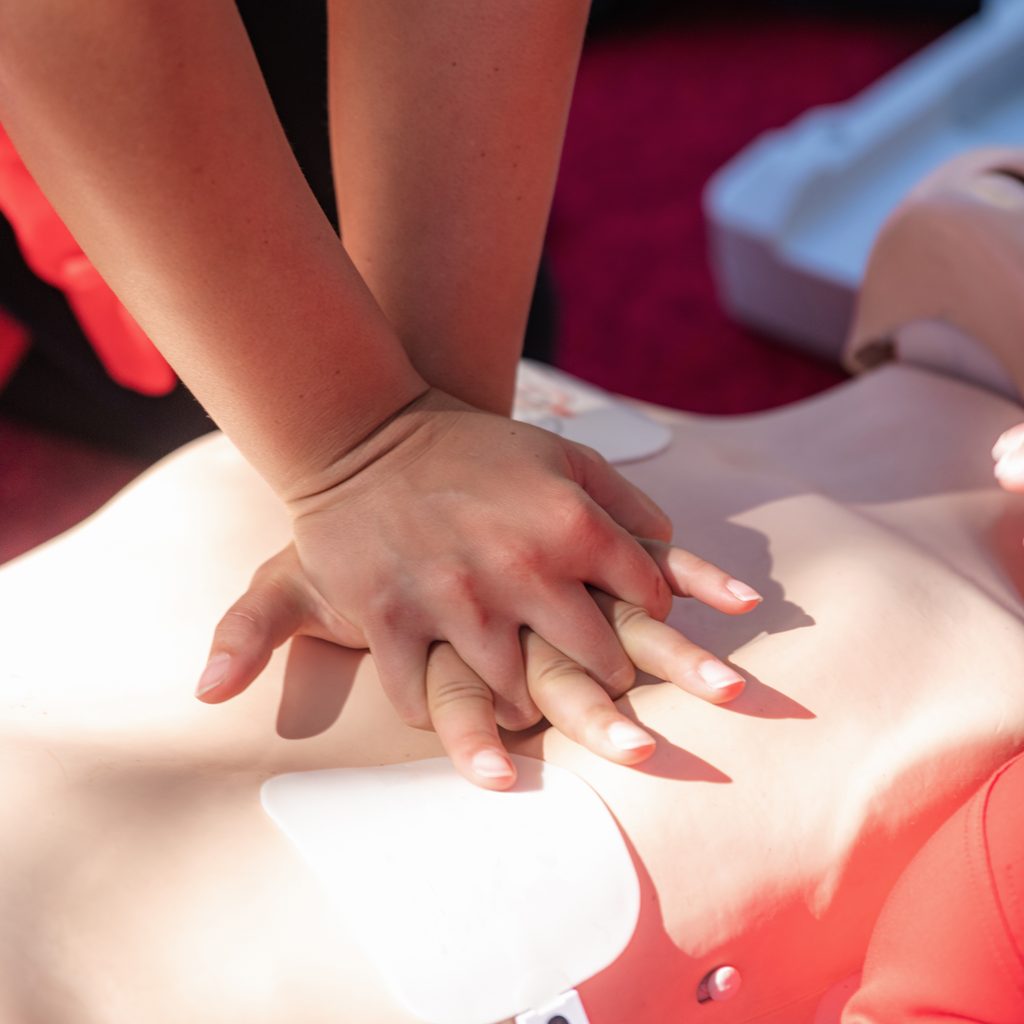
CPR/AED training focuses on recognizing cardiac arrest, performing CPR, and using an AED.
This is particularly relevant for trainers because many fitness facilities have AEDs available.
First Aid
First Aid training broadens your emergency-response skills beyond cardiac arrest.
Trainers may encounter injuries, falls, bleeding, sprains, or other situations during exercise.
Comfi-Kare offers AHA Heartsaver Basic First Aid for people who need practical first-aid skills in addition to other emergency training.
BLS
Basic Life Support is generally designed for healthcare professionals and others who require healthcare-provider-level resuscitation training.
A personal trainer should not automatically choose BLS simply because it sounds more advanced.
Choose the credential your employer, school, facility, or professional organization actually requires.
CPR/AED vs BLS for Personal Trainers
One common mistake is assuming every CPR certification is interchangeable.
It is not.
A general CPR/AED course may be appropriate for many fitness professionals, while BLS is designed around the needs of healthcare providers and other professionals who require that level of training.
Before registering, ask:
- Does my employer require CPR/AED?
- Does my trainer certification specify an accepted course?
- Is First Aid required too?
- Is BLS specifically requested?
- Does the course include hands-on skills practice?
- Will the certification card be accepted by my employer or certifying organization?
Taking five minutes to confirm these details can prevent you from completing a course that does not satisfy your requirement.
Do Sports Coaches Need CPR Certification?
Coaches face many of the same emergency-preparedness concerns as personal trainers.
This can include:
- Youth sports coaches
- School coaches
- Private coaches
- Athletic instructors
- Camp coaches
- Strength and conditioning professionals
- Recreation program staff
Requirements may vary by school, league, employer, athletic organization, or facility.
The important point is not to assume that because you already know basic CPR, you automatically meet your organization’s certification requirement.
Confirm whether you need a current certification card and what course is accepted.
If you are exploring how CPR credentials fit into different careers, see Comfi-Kare’s guide to careers that require or value CPR certification.
CPR and AED Training for Gyms and Fitness Facilities
CPR preparedness should not stop with one trainer.
Gym owners and fitness managers should consider what happens if a cardiac emergency occurs while the usual CPR-certified employee is not present.
That is where group training becomes valuable.
A facility may choose to train:
- Personal trainers
- Fitness instructors
- Front-desk employees
- Managers
- Coaches
- Group exercise instructors
- Aquatic staff
- Other employees who regularly interact with members
Having several trained employees can strengthen the facility’s overall emergency-response readiness.
Facilities planning staff-wide certification should also review CPR Certification for the Workplace: What Employers and Employees Need to Know.
Why Cardiac Emergencies During Exercise Require Preparation
Exercise increases cardiovascular demand, which is one reason fitness professionals should know how to recognize when a normal workout has become a medical emergency.
A trainer should be prepared to respond if someone suddenly becomes unresponsive, collapses, or stops breathing normally.
CPR and AED training helps trainers practice the sequence of recognizing an emergency, activating emergency medical services, beginning CPR, and using an AED when appropriate.
The value of training is not simply memorizing steps.
Hands-on practice can make the response more familiar before a real emergency occurs.
Why AED Training Matters for Personal Trainers
An AED is designed to analyze a person’s heart rhythm and, when appropriate, deliver a shock.
Fitness professionals should know where the AED is located in the facility where they work.
They should also know:
- How to access it quickly
- How to turn it on
- How to position the pads
- How to follow its prompts
- How CPR and AED use work together
A trainer should not first discover the location of the facility’s AED during an actual cardiac emergency.
Gym owners can improve preparedness by making sure employees know both the location of emergency equipment and their facility’s response procedure.
How Long Does CPR Certification Last for Personal Trainers?
Certification validity depends on the organization issuing the credential and the course taken.
Many commonly accepted CPR credentials have defined renewal periods, so trainers should check the expiration date shown on their certification card.
Do not wait until the day your employer asks for proof to discover that your credential has expired.
A simple approach is to schedule renewal before expiration so there is no gap in your professional requirements.
Is Online CPR Certification Accepted for Personal Trainers?
It depends on the employer or certification organization.
This is an area where trainers should be careful.
A website may offer an online CPR certificate quickly, but that does not automatically mean your gym, employer, school, or professional certification organization will accept it.
Before taking an online-only course, confirm:
- Which organization issues the credential?
- Does your employer accept it?
- Does your professional certification organization accept it?
- Is hands-on skills verification required?
- Do you need CPR and AED together?
Comfi-Kare’s guide to choosing CPR training explains why verifying the credential before registration matters.
How to Get CPR Certified in Maryland
If you are a personal trainer, fitness instructor, or coach in Maryland, begin by identifying your exact certification requirement.
Then choose a course that matches it.
Before registering:
- Ask your employer which credential is accepted.
- Check your professional certification requirements.
- Determine whether you need CPR/AED, First Aid, or BLS.
- Check whether hands-on training is required.
- Confirm how you will receive your certification card.
- Check when the credential expires.
Comfi-Kare CPR provides CPR, AED, First Aid, and professional-level resuscitation training for individuals and organizations across Maryland.
CPR Training for an Entire Gym or Coaching Staff
If several employees need certification, scheduling employees individually may not be the most efficient solution.
Group CPR training can be useful for:
- Gyms
- Personal training studios
- Athletic programs
- Recreation centers
- Coaching organizations
- Sports clubs
- Wellness facilities
Group training can also help create consistency because employees receive the same instruction and can discuss how emergency response applies to their specific workplace.
For more information about employee-wide preparedness, see CPR Certification for the Workplace: What Employers and Employees Need to Know.
Frequently Asked Questions
Do personal trainers have to be CPR certified?
Requirements vary by employer and professional certification organization. Some major fitness credentials require current CPR/AED certification. Trainers should verify the exact requirement that applies to them.
Does NASM require CPR certification?
Yes. NASM currently requires valid CPR and AED certification before a candidate takes the NASM-CPT certification exam.
Do fitness instructors need CPR and AED certification?
Many employers and professional organizations may require or strongly expect it. Confirm your specific workplace and credential requirements.
Do coaches need CPR certification?
It depends on the school, league, organization, employer, and coaching position. Coaches should verify the applicable requirement rather than assuming one rule applies everywhere.
Should personal trainers learn First Aid too?
First Aid can be valuable because fitness professionals may encounter injuries in addition to cardiac emergencies. Whether certification is required depends on the trainer’s workplace and professional requirements.
How often should trainers renew CPR certification?
Follow the expiration date and renewal requirements of the credential you hold. Renew before it expires if continuous certification is required.
Get CPR Certified for Your Fitness Career
The right CPR certification for personal trainers depends on where you work and which professional requirements apply to you.
For many trainers, CPR/AED is a fundamental professional credential. Others may also need First Aid or a different course level.
The most important step is to confirm your requirement first—and then complete recognized, practical training that prepares you to respond when it matters.
Comfi-Kare CPR offers CPR, AED, First Aid, and group training options for fitness professionals and organizations throughout Maryland.