Over 350,000 cardiac arrests happen outside hospitals every year in the United States. Immediate CPR can double or triple survival chances—but only if you know what to do.
This is the most comprehensive guide to CPR certification requirements in 2026.
Whether you’re a healthcare professional, teacher, parent, or someone who wants to be prepared, you’ll learn exactly what it takes to get certified, maintain your credentials, and confidently save lives.
We’ll cover everything: the difference between CPR training and certification, how to choose the right course, what to expect on the test, how long certification lasts, and the exact techniques you need to master. This guide consolidates 85+ specialized resources into one definitive roadmap.
By the end, you’ll know exactly how to meet CPR certification requirements and be ready when seconds count.
Key Takeaways
- CPR certification is valid for 2 years and requires both a written exam (70-84% passing score) and hands-on skills demonstration to earn your credential.
- Online-only courses don’t qualify for workplace certification.
- No medical background is required to get certified.
- You must master specific techniques to pass: 100-120 compressions per minute, proper depth (2-2.4 inches for adults), 30:2 compression-to-breath ratio, and AED operation.
About Comfi CPR: Why Trust This Guide?
For years, we’ve trained thousands of individuals across Maryland in life-saving CPR skills. The most common question we hear is: “What do I actually need to get certified?” People are confused by conflicting information online, unclear requirements, and the difference between training programs. We created this comprehensive guide to answer every question in one place.
Comfi CPR is an American Heart Association (AHA) authorized training center serving Frederick County, Rockville, Baltimore, and more locations in Maryland. Our certified instructors have trained healthcare professionals, teachers, parents, and community members—helping them meet certification requirements and gain the confidence to respond in real emergencies. We follow the latest AHA guidelines and have helped +679 of students earn their CPR certifications.
This guide is designed for anyone who needs to understand CPR certification requirements—whether you’re a nurse renewing your BLS certification, a teacher required to get certified for the first time, a parent who wants to protect your family, or a fitness professional building your credentials. If you have questions about getting certified, you’re in the right place.
What is CPR and Why Does It Matter?
Cardiopulmonary Resuscitation (CPR) is an emergency life-saving procedure performed when someone’s heart stops beating. By combining chest compressions with rescue breaths, CPR manually pumps blood to vital organs—particularly the brain—keeping the person alive until professional medical help arrives.
When cardiac arrest occurs, every second counts. For each minute that passes without CPR, survival chances decrease by 7-10%. However, immediate CPR can double or even triple a victim’s chance of survival.
The reality is that most cardiac arrests don’t happen in hospitals—they happen at home, at work, in schools, and in public spaces. Having life-saving skills means you can be the difference between life and death for someone you know.
- 88% of cardiac arrests occur at home.
- Brain damage can begin within 4-6 minutes without oxygen
- Professional emergency responders take an average of 8-12 minutes to arrive.
- Bystander CPR can increase survival rates from 10% to 30-40%.
CPR works by maintaining circulation when the heart can’t. Each compression pushes blood through the body, delivering oxygen to the brain and other critical organs. This buys precious time until an Automated External Defibrillator (AED) arrives or emergency medical services take over.
What is CPR Certification?
CPR certification is an official credential that proves you’ve been trained and tested on proper CPR techniques. It’s not just about knowing what to do—it’s about demonstrating that you can perform CPR correctly under pressure.
Here’s what makes certification different from simply watching a video or reading about CPR:
- Official Recognition:
A CPR certification card from accredited organizations like Comfi-Kare CPR serves as proof that you’ve met specific training standards and passed both written and practical exams. - Legal Protection:
CPR certification provides documentation that you were trained according to current guidelines, which can offer additional legal protection under Good Samaritan laws. While these laws generally protect anyone who attempts to help in an emergency, certification shows you acted with proper training. - Employment Requirement:
Many jobs legally require CPR certification. Healthcare workers, teachers, childcare providers, fitness trainers, and lifeguards often cannot work without maintaining current CPR credentials. - Skill Validation:
Certification requires you to demonstrate proper technique on training manikins, ensuring you can perform effective compressions, deliver rescue breaths correctly, and use an AED properly—skills that are difficult to master without hands-on practice.
Understanding the value of proper certification helps explain why it matters for both professional requirements and personal preparedness.
Difference Between CPR Training and Certification
This is one of the most common sources of confusion when people look into CPR requirements. The terms “CPR training” and “CPR certification” are often used interchangeably, but they represent two very different things—and understanding this difference is critical, especially if you need certification for work.
CPR training refers to any educational experience where you learn CPR techniques. This could be:
- Watching instructional videos online
- Attending a community awareness session
- Taking a hands-on workshop without formal testing
- Learning from a friend or family member who knows CPR
Training teaches you what to do and how to do it, but it doesn’t result in an official credential. You gain knowledge and may even practice on manikins, but there’s no formal assessment or certification card at the end.
Who needs training (but not certification)?
- Family members who want to be prepared at home
- Community members attending awareness events
- Anyone interested in learning life-saving skills for personal knowledge
CPR certification is a formal process that includes training plus official testing and documentation. To earn certification, you must:
- Complete an accredited course from organizations like Comfi-Kare or Red Cross
- Pass a written exam (typically 70-84% minimum score)
- Demonstrate proper CPR technique on manikins during a skills test
- Receive an official certification card with your name, certification date, and expiration date
Certification proves you’ve met specific standards and can perform CPR correctly. This credential is:
- Recognized by employers and regulatory agencies
- Required for many professional positions
- Valid for a specific time period (usually 2 years)
- Traceable through national databases
Most employers and regulatory agencies require official CPR certification, not just training.
For example:
- OSHA workplace requirements specify that employees must be certified by accredited organizations, not just “trained”
- State licensing boards for healthcare professionals verify certification cards with specific course codes
If you need CPR credentials for work, simply taking a training course—even a hands-on one—won’t satisfy the requirement. You need the official certification card.
Which CPR Certification Level Do I Need?
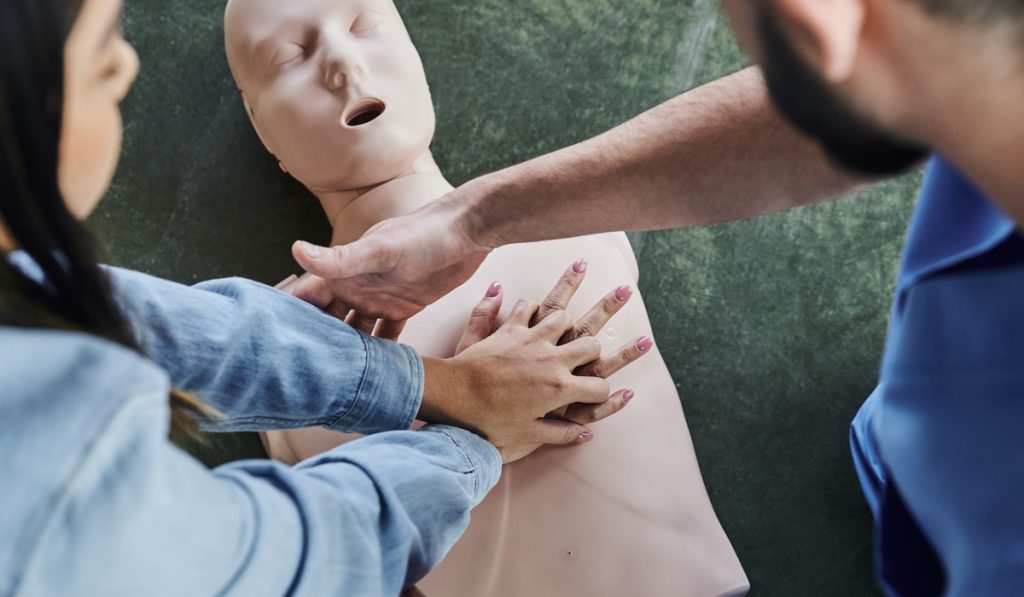
CPR certifications aren’t one-size-fits-all. The right certification depends on your profession and why you need it.
Standard (Layperson) Certifications – For non-medical professionals:
- Teachers and school staff
- Coaches and fitness trainers
- Parents and caregivers
- Office workers and managers
- Childcare providers
- Lifeguards
Healthcare Provider Certifications – For medical professionals:
The key difference: Healthcare certifications include two-rescuer scenarios, bag-valve masks, and medical-grade protocols. Layperson certifications focus on single-rescuer techniques for everyday emergencies.
Check your employer requirements before enrolling. Most healthcare facilities specify BLS certification, while schools and businesses typically require Heartsaver CPR/AED.
Basic Life Support (BLS)
BLS is the foundation for all healthcare professionals. It’s more comprehensive than standard CPR certification and required for anyone working in medical settings.
What BLS covers
- High-quality CPR for adults, children, and infants
- Two-rescuer CPR coordination
- Bag-valve-mask (BVM) ventilation
- AED use in clinical settings
- Team dynamics during resuscitation
- Opioid-associated emergency response
Who needs BLS certification
- Registered nurses (RNs) and licensed practical nurses (LPNs)
- Physicians and physician assistants
- EMTs and paramedics
- Respiratory therapists
- Dental hygienists and dentists
- Physical and occupational therapists
- Medical students and nursing students
- Home health care providers
Unlike Heartsaver courses, BLS assumes you may be part of a healthcare team. You’ll learn to coordinate with other rescuers, use medical equipment, and follow hospital protocols.
Also See CPR Certification for Dentists: BLS Requirements for Dental Staff
Advanced Cardiovascular Life Support (ACLS)
ACLS builds on BLS with advanced protocols for cardiac emergencies. This certification is for experienced healthcare providers managing critical situations.
What ACLS covers
- Advanced airway management
- ECG rhythm interpretation
- Pharmacology for cardiac emergencies
- Defibrillation and cardioversion
- Post-cardiac arrest care
- Acute coronary syndromes
- Stroke management
- Team leadership during codes
Who needs ACLS certification
- Emergency room nurses and physicians
- ICU and CCU staff
- Anesthesiologists and CRNAs
- Paramedics (advanced level)
- Flight nurses and critical care transport
- Cardiac catheterization lab staff
Current BLS certification required before taking ACLS.
ACLS requires understanding medication protocols and rhythm recognition. Many students find the pharmacology component challenging without proper study.
Pediatric Advanced Life Support (PALS)
PALS is specialized training for healthcare providers who treat critically ill or injured children and infants.
What PALS covers
- Systematic pediatric assessment
- Recognition of respiratory emergencies in children
- Shock management in pediatric patients
- Cardiac arrest algorithms for children and infants
- Effective resuscitation team dynamics
- Post-cardiac arrest management for pediatrics
Who needs PALS certification
- Pediatric nurses and physicians
- Emergency department staff who treat children
- Intensive care unit (PICU) nurses
- Paramedics responding to pediatric calls
- Labor and delivery nurses
- School nurses in some districts
Current BLS certification required.
Children aren’t small adults—their physiology is different. PALS teaches you to recognize deterioration early and intervene appropriately for pediatric patients.
While PALS is for healthcare professionals treating children, children themselves can also get CPR certified. Kids can learn age-appropriate CPR skills and earn certification through youth programs. Teaching children these life-saving skills early builds confidence and creates a generation of capable responders.
Heartsaver CPR/AED
Heartsaver is the standard certification for non-healthcare professionals. It’s designed for workplace requirements, community responders, and anyone who needs official CPR credentials.
What Heartsaver covers
- Adult CPR and AED use
- Child CPR (ages 1-12)
- Infant CPR (under 1 year)
- Choking relief for all ages
Who needs Heartsaver certification
- Teachers and school administrators
- Coaches and athletic trainers
- Fitness instructors and personal trainers
- Lifeguards and pool operators
- Construction workers (OSHA requirement)
- Electricians and utility workers
- Childcare workers and nannies
- Security personnel
- Office safety coordinators
Heartsaver focuses on single-rescuer scenarios you’d encounter outside medical settings. No bag-valve masks or two-rescuer coordination.
| Certification | Target Audience | Prerequisites | Key Focus |
| Heartsaver CPR/AED | General public, non-medical workers | None | Single-rescuer CPR, basic response |
| BLS | Healthcare professionals | None | Medical-grade CPR, team coordination |
| ACLS | Advanced healthcare providers | Current BLS | Cardiac emergencies, medications, ECG |
| PALS | Pediatric healthcare providers | Current BLS | Critically ill children, pediatric assessment |
All certifications are valid for 2 years and require renewal.
At Comfi CPR, we offer all certification levels—from Heartsaver to ACLS and PALS—at convenient locations across Maryland. Our AHA-certified instructors provide hands-on training that ensures you pass your exam and feel confident responding in real emergencies.
Can I Get CPR Certified Online?

This is the most common question we receive—and the answer requires clarification.
You can complete part of your training online, but you cannot get fully certified online if you need workplace certification.
OSHA and most employers require hands-on skills demonstration with a certified instructor. Online-only courses teach you the theory, but they don’t verify you can perform CPR correctly on a manikin.
1. Fully Online (Theory Only)
- Complete course at your own pace
- Watch videos and pass written exam
- Receive completion certificate
- Does NOT qualify for workplace requirements
- Best for: Personal knowledge, refreshing skills between certifications
2. Blended Learning (Online + In-Person)
- Complete theory portion online (1-2 hours)
- Attend in-person skills session (1-2 hours)
- Instructor evaluates your technique on manikins
- DOES qualify for workplace certification
- Best for: Busy professionals who need flexibility
3. Fully In-Person
- Complete everything in one classroom session (2-4 hours)
- Instruction, practice, and testing all in person
- Immediate feedback from instructor
- DOES qualify for workplace certification
- Best for: Hands-on learners, first-time students
What employers accept
- ✅ Blended learning with skills session
- ✅ Fully in-person training
- ❌ Online-only courses
What to Expect in Your CPR Class
Understanding what happens during certification helps you prepare and reduces test anxiety.
Before class
- Some courses require pre-reading or online modules
- Wear comfortable clothing (you’ll be kneeling on the floor)
- Bring photo ID and payment (if not prepaid)
- Arrive 10 minutes early for check-in
During class – Theory portion
- CPR fundamentals and science
- When to start/stop CPR
- Legal considerations (Good Samaritan laws)
- Chain of survival concepts
- AED operation
- Instructor may use videos, slides, or demonstrations
During class – Skills practice
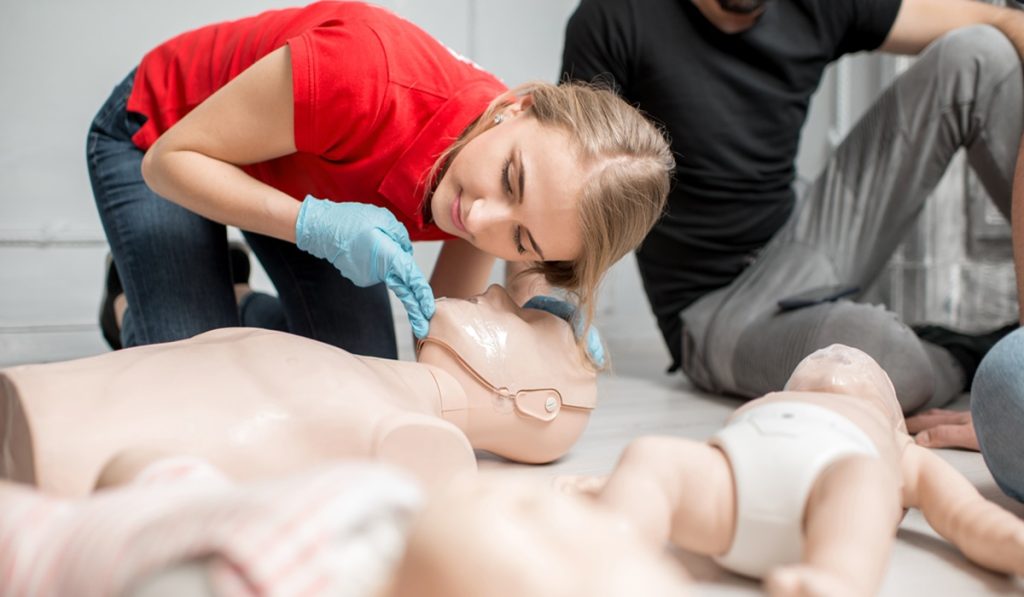
- Hands-on practice with manikins (adult, child, infant)
- Instructor demonstrates proper technique
- You practice until comfortable
- Compression depth, rate, and hand placement
- Rescue breathing technique
- AED pad placement and operation
- Choking relief (Heimlich maneuver)
Skills testing
- Demonstrate CPR on adult manikin (required)
- May include child/infant scenarios depending on course
- Show proper AED use
- Instructor uses checklist to evaluate technique
- You must pass skills test to earn certification
What Happens If I Fail the CPR Test?
Failing a CPR test isn’t uncommon—and it’s not the end of your certification journey.
Written exam failures
- Rushing through questions without reading carefully
- Not studying key numbers (compression rates, depths, ratios)
- Misunderstanding scenario-based questions
- Test anxiety
Skills test failures
- Insufficient compression depth (can’t feel depth on manikin)
- Incorrect hand placement (too high or too low)
- Forgetting steps in sequence
- Nervousness affecting performance
How to prepare better
- Review course materials before test day
- Practice on manikins during class (don’t rush)
- Ask instructor for feedback during practice
- Memorize key numbers before arriving
- Take practice tests online
- Watch technique videos to reinforce learning
What Precautions Should I Take Before Starting CPR?
CPR saves lives—but only when performed safely. Before starting chest compressions, you must assess the scene and protect yourself.
Step 1: Check Scene Safety
Never rush into a situation without evaluating potential dangers. Ask yourself:
- Is there ongoing danger? (fire, traffic, electrical hazards, violence)
- Is the area structurally safe? (unstable building, falling debris)
- Are there hazardous materials? (chemical spills, gas leaks)
- Is there risk of infection? (blood, bodily fluids)
If the scene is unsafe, do not approach. Call 911 and wait for professional responders. Your safety always comes first—you can’t help if you become a victim.
If you must move the person to safety (away from traffic, fire), drag them by their clothing or shoulders while supporting the head and neck. Only move them if absolutely necessary.
Step 2: Use Personal Protective Equipment (PPE)
The AHA recommends barrier devices when performing CPR to reduce infection risk:
Minimum protection
- CPR face shield or pocket mask (for rescue breaths)
- Disposable gloves (if available)
Ideal protection (for trained responders)
- N95 or surgical mask
- Eye protection
- Disposable gloves
- CPR barrier device with one-way valve
If you don’t have PPE, you can still perform hands-only CPR (compressions without rescue breaths). According to the American Heart Association, hands-only CPR is effective for adult cardiac arrest victims.
Step 3: Check for Responsiveness
Before starting CPR, confirm the person needs it:
- Tap shoulders firmly and shout: “Are you okay?”
- Look for normal breathing: Is the chest rising and falling? (Don’t confuse gasping with normal breathing—gasping requires CPR)
- Check for response: Do they move, open their eyes, or make sounds?
If they respond: They don’t need CPR. Keep them comfortable and monitor until help arrives.
If no response and no normal breathing: Begin CPR immediately.
Step 4: Activate Emergency Services
Call 911 before starting CPR (or have someone else call while you begin). Tell the dispatcher:
- Your location (exact address or landmarks)
- What happened
- Person’s condition (unresponsive, not breathing)
- That you’re starting CPR
Put phone on speaker so you can receive dispatcher instructions while performing CPR.
Step 5: Get an AED
If someone is nearby, send them to find an Automated External Defibrillator (AED) while you start CPR. According to AHA research, using an AED within the first 3-5 minutes of cardiac arrest can increase survival rates by 70%.
AEDs are commonly located in
- Office buildings and schools
- Gyms and recreational facilities
- Shopping malls and airports
- Government buildings
- Sports venues
Don’t delay CPR to search for an AED yourself. Start compressions immediately and use the AED when it arrives.
Are There Differences in Performing CPR on Babies, Children, and Adults?
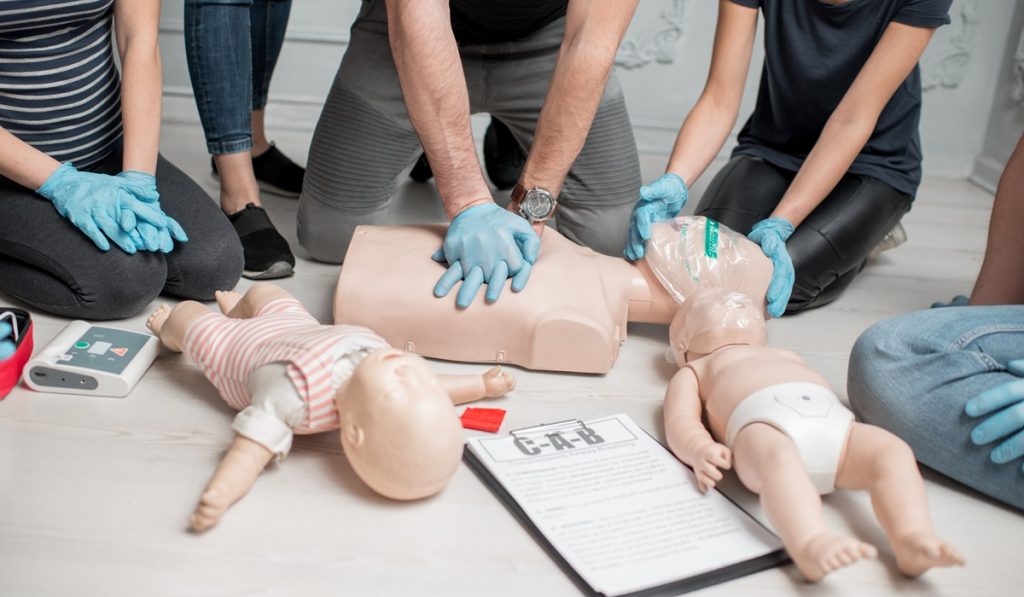
Yes—and knowing these differences can save a life. Age determines compression technique, depth, and hand placement.
Age Categories
- Adult: 12 years and older (or showing signs of puberty)
- Child: 1 year to 12 years old (prepubescent)
- Infant: Under 1 year old
Adult CPR (Ages 12+)
Hand Placement
- Place heel of one hand on center of chest (lower half of breastbone)
- Place other hand on top, interlocking fingers
- Position shoulders directly over hands
- Keep arms straight, elbows locked
Compression Technique
- Depth: 2 to 2.4 inches (5-6 cm)
- Rate: 100-120 compressions per minute
- Ratio: 30 compressions to 2 rescue breaths (30:2)
- Push hard and fast
- Allow full chest recoil between compressions
- Minimize interruptions (less than 10 seconds)
When to use two hands: Always for adults. Use your body weight, not just arm strength.
Child CPR (Ages 1-12)
Hand Placement
- Same position as adults (center of chest, lower breastbone)
- Use one or two hands depending on child’s size
- Smaller children: one hand may be sufficient
- Larger children: use two hands like adult CPR
Compression Technique
- Depth: About 2 inches (5 cm) — one-third of chest depth
- Rate: 100-120 compressions per minute
- Ratio: 30 compressions to 2 rescue breaths (30:2 for single rescuer)
- Less force than adult CPR
- Full chest recoil still critical
Children’s chests are more flexible. You don’t need as much force, but you still need adequate depth to circulate blood effectively.
Infant CPR (Under 1 Year)
Hand Placement
- Place two fingers on center of chest, just below nipple line
- Use middle and ring fingers (or index and middle fingers)
- Other hand supports infant’s head and neck
- Never use full palm or multiple fingers
Compression Technique
- Depth: About 1.5 inches (4 cm) — one-third of chest depth
- Rate: 100-120 compressions per minute
- Ratio: 30 compressions to 2 rescue breaths (30:2 for single rescuer)
- Gentle but firm pressure
- Use only two fingers, never heel of hand
Special considerations for infants
- Support head and neck throughout
- Cover infant’s mouth AND nose with your mouth for rescue breaths
- Smaller breaths—just enough to make chest rise
- Infants are fragile—be gentle but effective
| Factor | Adult | Child | Infant |
| Hand Position | Two hands, center of chest | One or two hands, center of chest | Two fingers, below nipple line |
| Compression Depth | 2-2.4 inches | 2 inches | 1.5 inches |
| Compression Rate | 100-120/min | 100-120/min | 100-120/min |
| Ratio (single rescuer) | 30:2 | 30:2 | 30:2 |
| Rescue Breaths | Mouth-to-mouth | Mouth-to-mouth | Mouth-to-mouth-and-nose |
What Do I Do If Someone Is Choking?
Choking is a life-threatening emergency that requires immediate action. Recognition and proper technique can save a life in minutes.
Universal choking sign: Hands clutching throat
- Cannot speak, cough, or breathe
- Silent or weak cough
- High-pitched wheezing sounds
- Face turning red, then blue
- Loss of consciousness (severe)
Critical distinction
- Mild obstruction: Person can cough forcefully, speak, or breathe → Encourage coughing, don’t intervene
- Severe obstruction: Cannot cough, speak, or breathe → Act immediately
Heimlich Maneuver for Adults and Children (Over 1 Year)
- Stand behind the person
- Wrap arms around their waist
- Make a fist with one hand, place thumb side against abdomen (above navel, below ribcage)
- Grasp fist with other hand
- Give quick, upward thrusts (like lifting the person up)
- Repeat until object dislodges or person becomes unconscious
- Each thrust should be separate and distinct
If the Choking Person Becomes Unconscious
This is when choking becomes a CPR situation.
- Lower person to ground carefully
- Call 911 immediately (or have someone call)
- Begin CPR starting with chest compressions (skip rescue breath check)
- Before giving rescue breaths, look in mouth for visible object
- If you see object, remove it with finger sweep
- If no object visible, continue CPR
- Chest compressions may dislodge the object
How to Use an AED
An Automated External Defibrillator (AED) is a portable device that analyzes heart rhythm and delivers an electric shock to restore normal heartbeat. AEDs are designed for anyone to use—no medical training required.
When to use an AED
- Person is unresponsive
- Not breathing normally
- You’ve started CPR
- AED becomes available
AEDs detect abnormal heart rhythms (like ventricular fibrillation) and determine if a shock is needed. You cannot accidentally shock someone who doesn’t need it—the AED won’t allow it.
Who Needs CPR Certification?
- Registered nurses (RNs) and licensed practical nurses (LPNs)
- Physicians and physician assistants
- EMTs and paramedics
- Dental hygienists and dentists
- Respiratory therapists
- Physical and occupational therapists
- Medical assistants
- Home health aides
- Pharmacists
- Teachers (all grade levels)
- School administrators and principals
- School nurses
- Coaches and athletic trainers
- Daycare workers and directors
- Nannies and au pairs
- Foster parents
- Camp counselors
- Personal trainers and fitness instructors
- Lifeguards and swim instructors
- Police officers and firefighters
- Security guards
- Flight attendants
- Construction workers (OSHA requirement)
- Electricians and utility workers
- Social workers
- Massage therapists
- Nutritionists and dietitians
- Childcare providers
- Parents and caregivers
Certification Validity Period
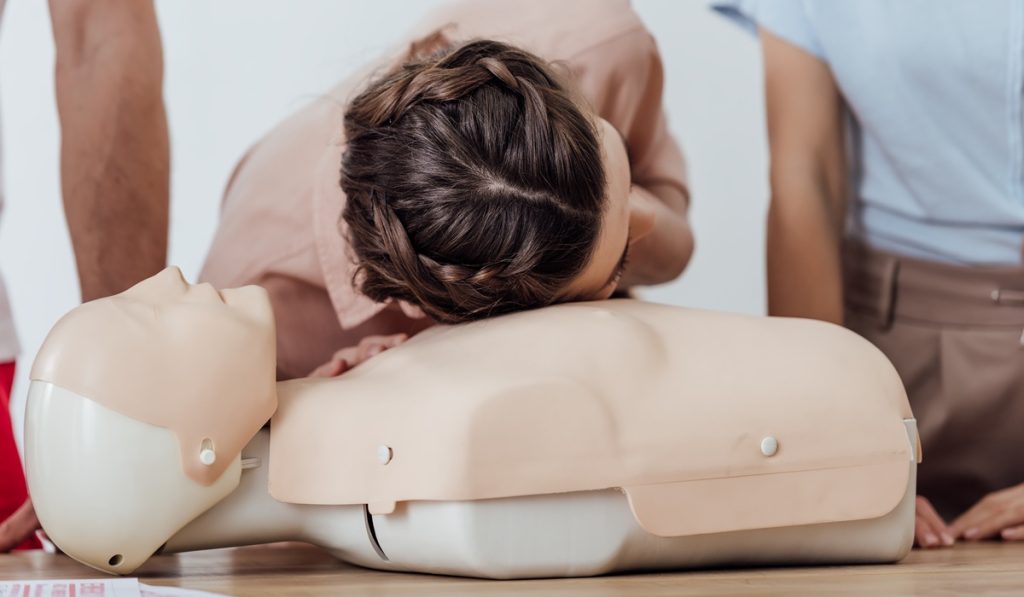
CPR certification is valid for 2 years from the date of issue, regardless of certification type (Heartsaver, BLS, ACLS, PALS).
- Skills degrade within 6-12 months without practice
- CPR guidelines update every 5 years—renewal ensures current knowledge
- Maintains competency and confidence
If certification expires, you’re immediately uncertified. Many providers no longer offer 30-day grace periods.
How to Check Your Expiration Date
Physical card: Expiration date printed on front
Digital certificate: Check AHA or Red Cross online portals
Lost card: Contact training provider or verify through AHA eCard verification or Red Cross digital certificates
Set reminders: Mark your calendar 60-90 days before expiration to schedule renewal.
How Often Should I Refresh My CPR Knowledge?
Official requirement: Every 2 years (certification renewal)
Recommended practice between certifications:
- Review CPR steps every 6 months
- Watch technique videos annually
- Use free apps
- Practice on manikins if accessible
- Attend optional refresher workshops
Why frequent review matters:
- Research shows skills decline within 6-12 months
- Muscle memory fades without practice
- Confidence decreases over time
- Guidelines may update between certifications
First Aid Skills to Complement CPR
Basic first aid skills that complement CPR
- Bleeding control and wound care
- Burn treatment (1st, 2nd, 3rd degree)
- Fracture and sprain management
- Shock recognition and treatment
- Seizure response
- Diabetic emergencies
- Allergic reactions and anaphylaxis
Common Emergencies
Stroke recognition (FAST method)
- Face drooping
- Arm weakness
- Speech difficulty
- Time to call 911
Heart attack vs. cardiac arrest
- Heart attack: Heart still beating, person conscious, chest pain
- Cardiac arrest: Heart stops, person unconscious, needs CPR
Burn treatment
- Cool water (not ice) for 10-20 minutes
- Cover with sterile bandage
- Don’t apply butter, oils, or ointments
- Seek medical attention for severe burns
Wound care basics
- Apply direct pressure to stop bleeding
- Clean with water
- Apply antibiotic ointment
- Cover with bandage
- Watch for infection signs
Seasonal Considerations
Allergy management
- Recognize severe allergic reactions
- EpiPen administration
- When to call 911
Holiday emergencies
- Increased cardiac events during holidays
- Choking risks at gatherings
- Alcohol-related emergencies
CPR Myths and Common Mistakes
| Myth/Question | Truth | What to Do |
| Can I accidentally kill someone while giving CPR? | Person is already clinically dead without a pulse. CPR can’t make it worse. Rib fractures can occur but are preferable to death. | Perform CPR confidently. Good Samaritan laws protect you. |
| Do I need to give rescue breaths? | Hands-only CPR (compressions only) is effective for adults. Children and drowning victims benefit more from breaths. | Adults: compressions-only acceptable. Children/infants: include rescue breaths if trained. |
| Will CPR work if I’m not certified? | Yes. The New York Times says acting is better than doing nothing, even without certification. | Call 911, start compressions, continue until help arrives. |
| What if I do CPR on someone who doesn’t need it? | If person is responsive and breathing, they don’t need CPR. Check first. | Always check responsiveness and breathing before starting. |
| Compressions too shallow | Most common error. Compressions must be 2-2.4 inches deep for adults. | Push hard—use body weight, not just arms. |
| Incorrect hand placement | Hands too high or too low reduces effectiveness. | Center of chest, lower half of breastbone. |
| Not allowing full chest recoil | Chest must fully expand between compressions for blood flow. | Lift hands slightly after each compression. |
| Compression rate too slow/fast | Must be 100-120/minute. Too slow = inadequate circulation. Too fast = incomplete recoil. | Count out loud or use metronome/song rhythm. |
| Long pauses between compressions | Every pause reduces blood flow. Interruptions should be <10 seconds. | Minimize breaks—only pause for breaths or AED analysis. |
| Forgetting to call 911 first | EMS must be activated immediately—they bring advanced care. | Call 911 BEFORE starting CPR (or have someone else call). |
| Giving up too soon | Continue CPR until: person recovers, EMS arrives, you’re physically unable, or scene becomes unsafe. | Don’t stop—survival depends on continuous CPR. |
| Poor rescue breath seal | Air leaks reduce oxygen delivery. | Pinch nose, full mouth seal, watch for chest rise. |
Special Situations & Considerations
Important CPR considerations for special circumstances:
- Pacemakers / Implanted Devices
Look for a bump under the skin on the chest. Place AED pads at least 1 inch away from the device. CPR can be performed normally—compressions will not damage the device. - Pregnant Women
If the woman is visibly pregnant and unresponsive, perform CPR normally. Place hands slightly higher on the breastbone. Tilt the woman slightly to the left side if possible to relieve pressure on major blood vessels. - Elderly / Brittle Bones
Rib fractures are more common, but CPR should still be performed. Survival outweighs fracture risk. Use proper compression depth—do not reduce compression quality out of fear. - Cardiac Arrest Symptoms Differ by Gender
Women often experience atypical symptoms such as nausea, fatigue, jaw pain, or back pain, while men more commonly experience classic chest pain. Recognizing these differences supports earlier intervention. - Drowning Victims
Rescue breaths are critical, with oxygen prioritized. Give 5 rescue breaths before starting compressions. Continue with the standard 30:2 ratio.
Advanced Training Options
When to advance beyond basic CPR
- Career advancement: ACLS and PALS certifications required for promotions in ICU, ER, critical care positions
- Specialization: Working with specific populations (pediatrics, cardiac patients, emergency medicine) requires advanced protocols
- Professional development: Demonstrates commitment to excellence and expanded skillset
- Salary increase: Advanced certifications often lead to higher pay grades in healthcare settings
ACLS (Advanced Cardiovascular Life Support)
- Builds on BLS with ECG interpretation, advanced airway management, cardiac medications
- Required for: ER nurses, ICU staff, paramedics, anesthesiologists
PALS (Pediatric Advanced Life Support)
- Specialized pediatric assessment, respiratory emergencies, shock management for children
- Required for: Pediatric nurses, PICU staff, pediatric ER, paramedics
- Course: 12-14 hours initial, prerequisites include current BLS
Combining certifications (BLS + ACLS + PALS)
- Maximum credentials for healthcare professionals
- Qualifies you for widest range of positions
- Common in emergency medicine, critical care, flight nursing
CPR Certification Across Maryland
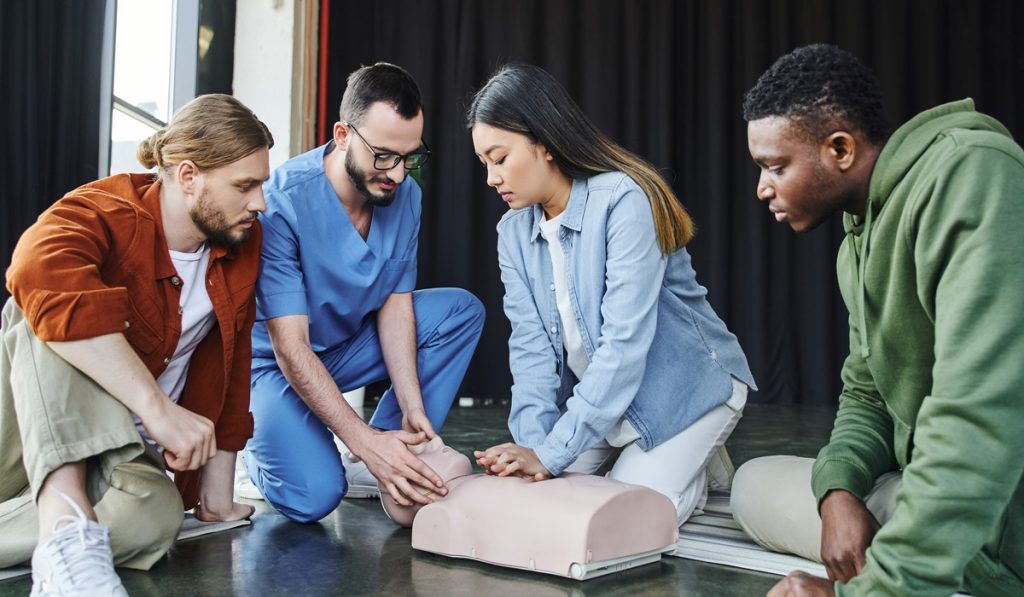
Comfi CPR serves communities throughout Maryland, bringing AHA-certified training directly to locations across Montgomery County, Frederick County, Howard County, Prince George’s County, and surrounding areas. Whether you’re in Silver Spring, Frederick, Columbia, or any city in between, our mobile training model eliminates travel barriers and makes meeting CPR certification requirements convenient for busy professionals, teachers, parents, and healthcare workers.
As an American Heart Association authorized training center, Comfi CPR delivers the same rigorous standards required by hospitals, school districts, and licensing boards statewide. Our experienced instructors have trained over 679 students across Maryland, helping nurses maintain BLS credentials, teachers meet state mandates, and parents gain confidence to protect their families. Every course—from Heartsaver to ACLS and PALS—follows current AHA guidelines and includes hands-on practice that ensures you’re truly prepared for emergencies, not just holding a card.
Maryland’s CPR certification requirements don’t change based on location, and neither does our commitment to excellence. We bring expert instruction, professional equipment, and personalized attention to your community, ensuring you receive the highest-quality training without the inconvenience of distant training centers. When you need to meet CPR certification requirements in Maryland, Comfi CPR makes it efficient, accessible, and effective.
Conclusion
Meeting CPR certification requirements in 2026 doesn’t have to be complicated. This guide has walked you through every step—from understanding the difference between training and certification, to choosing the right course format, mastering techniques for adults and children, and maintaining your credentials through renewal.
Whether you’re a healthcare professional, teacher, parent, or someone committed to being prepared, you now have the knowledge to get certified efficiently and respond confidently when emergencies strike.
CPR certification requirements exist for one powerful reason: they ensure you can save a life when seconds count. The two-year validity period, hands-on skills testing, and ongoing education aren’t bureaucratic hurdles—they’re safeguards that keep your skills sharp and aligned with the latest resuscitation science.
Have questions we didn’t cover? Contact Comfi CPR—we’re here to guide you every step of the way.
Frequently Asked Questions about CPR Certification Requirements
What are the basic requirements to get CPR certification?
You must complete accredited training classes from the American Heart Association or Red Cross, pass a written exam (70-84%), and demonstrate proper technique during hands-on skills assessment. No prior medical experience needed—first aid training and CPR courses are designed for everyone.
Which organizations offer official CPR certification and are widely recognized?
The American Heart Association (AHA) and American Red Cross are most widely accepted. Both meet workplace certification needs and provide certification cards with a unique ID verifiable through standard QR reader on any smart device. Your student training information is stored in official databases for employer verification.
Is CPR certification available online and is it valid everywhere?
Online CPR courses exist, but fully online certifications don’t meet most workplace certification needs. OSHA requires in-person skills sessions. Blended learning (online courses plus in-person skills testing) is widely accepted and offers flexibility while meeting employer requirements.
Do I need to renew my CPR certification, and how often?
Yes, every 2 years. Skills degrade over time and the latest techniques evolve. Renewal training classes are shorter (1-2 hours) and update you on current protocols. Renew 60-90 days before expiration to avoid retaking the full course.
How do CPR certification requirements differ for healthcare providers?
Healthcare providers need Basic Life Support (BLS), which includes two-rescuer CPR and bag-valve-mask ventilation. Standard Heartsaver online CPR is for non-medical workers. Advanced roles may require ACLS or PALS. All healthcare certifications require in-person training classes—no fully online courses qualify.
Are there any age or educational prerequisites to take a CPR certification course?
Most courses require ages 11-12+. No educational background needed. First aid certification and CPR training are accessible to anyone. Advanced courses (ACLS, PALS) require current BLS as prerequisite, but basic certification has no prior requirements.
What steps are involved in the process of earning CPR certification?
Enroll in accredited training classes, complete theory (online courses or in-person), practice on manikins, pass written exam, demonstrate skills, receive certification card. Digital certificates include unique ID scannable with standard QR reader on smart device. Physical cards show student training information and expiration date.
Is CPR and AED certification required for certain jobs or professional licenses?
Yes. Healthcare workers need BLS. Teachers, childcare providers, coaches, and fitness instructors need Heartsaver CPR/AED. Lifeguards require water safety certification plus CPR. Construction workers may need it for OSHA compliance. Always verify workplace certification needs with your employer.
What kind of training or assessment do I need to pass for CPR certification?
Written exam on protocols and practical skills assessment. You’ll demonstrate compression depth, rate (100-120/min), rescue breathing, and AED use on manikins. Many courses combine first aid training covering bleeding control and burns.
Do CPR certification requirements vary by state or location?
Core requirements follow national standards using the latest techniques, so certification is valid nationwide. However, workplace certification needs vary—some states require CPR for teachers, others don’t. Your certification card with unique ID works everywhere. Verify specific employer or licensing requirements for your location.