BLS certification training in Montgomery County, MD—earn your AHA Basic Life Support with hands-on CPR/AED practice, small classes, flexible weekday or weekend sessions, and an
official AHA eCard
issued after completion.
Basic Life Support Certification (BLS) is the foundation of emergency care for individuals experiencing life-threatening events such as cardiac arrest, respiratory failure, or choking.
For healthcare providers and trained responders focusing on:
High-quality CPR
Early use of an AED (automated external defibrillator)
Effective teamwork in critical situations
Key skills covered in this course:
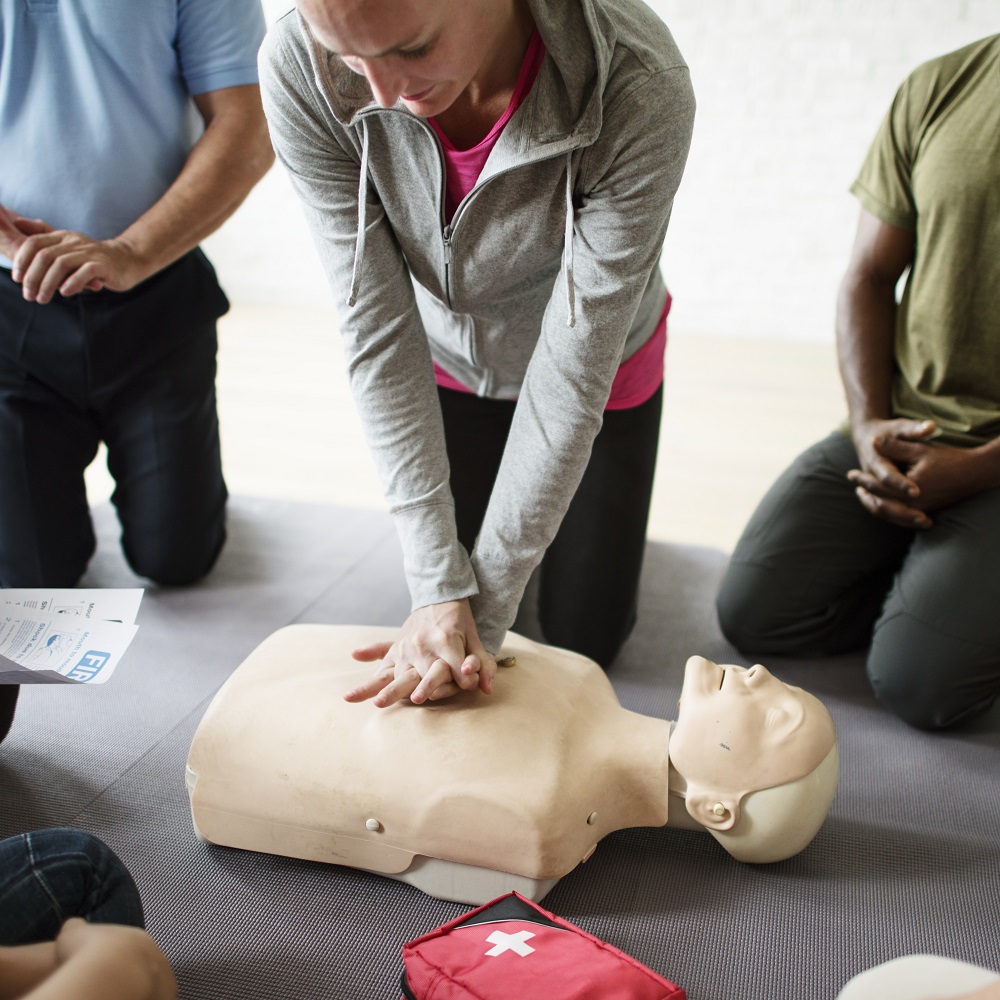
Hands-on practice to build confidence
Skills to act quickly when every second counts
Preparation for real-life emergencies
The course provides practical training to ensure you can respond fast and effectively when lives are at risk.
BLS certification shows you’re ready to take action and save lives during emergencies, whether in a hospital, clinic, or community setting.
Get BLS certified — it proves you’re prepared to respond with confidence when every second matters.
If your current BLS card is nearing its expiration date, it’s time to renew your skills with BLS renewal. Staying up to date ensures you’re prepared to respond effectively during emergencies and remain compliant with employer or licensing requirements.
Our BLS course training classes for recertification are led by experienced BLS instructor professionals who review key life-saving techniques and the latest AHA guidelines. Students will participate in hands-on practice, updated scenarios, and a review of critical skills.
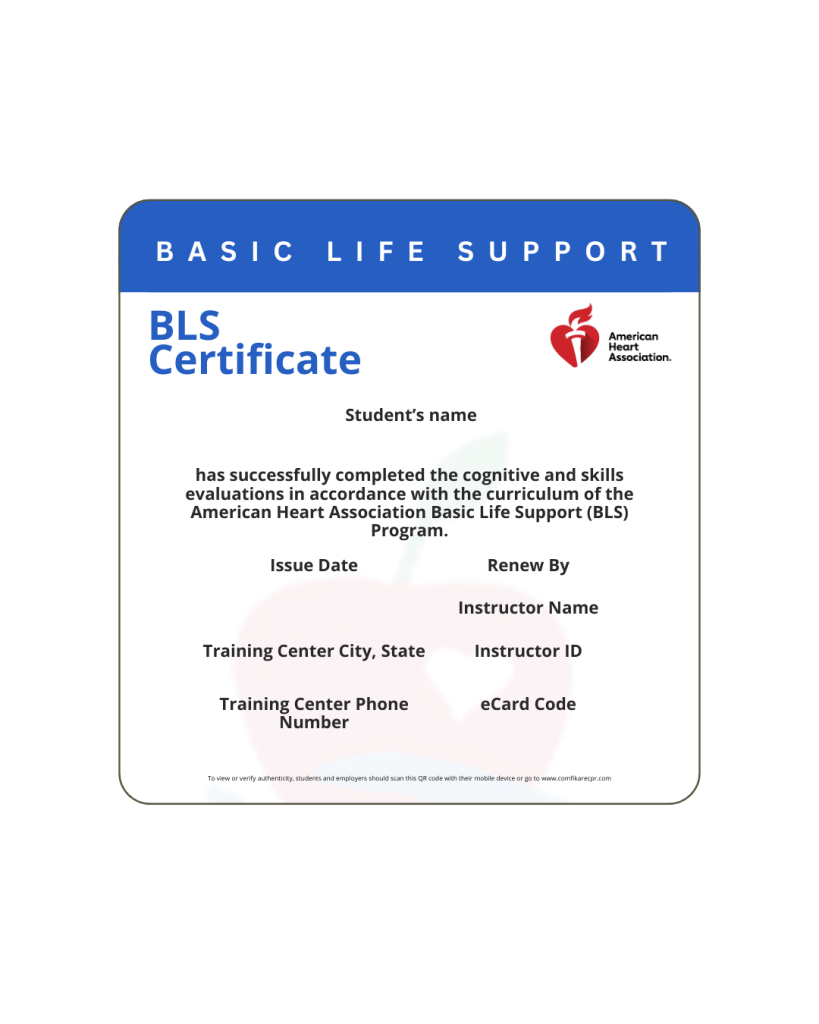
To complete the course, each student must pass a BLS test that covers CPR, AED use, and emergency response steps. Upon successful completion, you’ll receive a new AHA BLS card, valid for another two years.
Whether you’re a healthcare provider or first responder, renewing your certification through a trusted BLS course, training, and lifeguarding program helps maintain confidence and competence when it matters most.
BLS Initial and Renewal Cost
Our BLS certification course and training are both reliable and reasonably priced. For a one-time fee of $80, students receive complete access to instructor-led instruction, the official certification exam, and all required course materials. Perfect for healthcare providers and lifeguarding professionals, there are no hidden fees or surprise charges—just straightforward, high-quality instruction that prepares you to earn your BLS certificate with confidence.
What You Get with Comfi-Kare CPR Certification
Feature
Certification
Recertification
Official AHA certification for BLS, ACLS, PALS & Heartsaver—all in one place
Certification
Recertification
4-hour, in-person PALS class at our Silver Spring training center
Certification
Recertification
Professional and certified BLS instructor
Certification
Recertification
Practice CPR training on manikins and AED trainers.
Certification
Recertification
Official AHA certification eCard issued after you pass (valid 2 years)
Certification
Recertification
Weekday and weekend schedules available
Certification
Recertification
Who Needs BLS Certification
Healthcare professionals
Caregivers
Clinical Students
Dental Teams
Teachers and Instructors
Security team
What Does This Course Teach?
Control bleeding (direct pressure; watch for internal).
Trustindex verifies that the original source of the review is Google.
Good and reliable
Posted on Google
Victoria Downs
Trustindex verifies that the original source of the review is Google.
Orville was an awesome instructor. I feel confident in my CPR abilities after attending his class. I will definitely come here again when it is time to renew.
Posted on Google
zoubair mou
Trustindex verifies that the original source of the review is Google.
The BLS course I took with Comfi-Kare CPR was fantastic! The professors made the class interesting and simple to understand, plus they were highly competent and informed. I felt confidence in my abilities after the great practical practice. I strongly suggest Comfi-Kare CPR to anyone searching for an excellent BLS course!
Posted on Google
Sejal Parepally
Trustindex verifies that the original source of the review is Google.
Magna is a great instructor with a lot of experience!
Posted on Google
Brianna Velez
Trustindex verifies that the original source of the review is Google.
Had a great time learning BLS. Great instructor!
Posted on Google
Jennifer Ren
Trustindex verifies that the original source of the review is Google.
Very straightforward process with scheduling my BLS course! Super flexible with times/days classes are offered. I was able to get my certification a few days after contacting them. The instructor Orville was so patient and kind. Will be coming back for my renewal :)
Posted on Google
Pooja Desai
Trustindex verifies that the original source of the review is Google.
The instructor is very kind and friendly. I highly recommend them.
Posted on Google
Andrea Galdamez
Trustindex verifies that the original source of the review is Google.
Very nice
Posted on Google
Rhonda Kane
Trustindex verifies that the original source of the review is Google.
Comfi-kare CPR is an excellent CPR training program. I highly recommend learning with this company.
Posted on Google
Nicole Ssentongo
Trustindex verifies that the original source of the review is Google.
This was a very pleasant course. The instructor was very informative and kind. It was a very engaging and space learning environment. I would highly recommend everyone to use go to this cpr course!
Frequently Asked Questions About BLS Certification
What is a BLS certification?
BLS stands for Basic Life Support. A BLS certification demonstrates that a healthcare provider has been trained to recognize and respond to life-threatening emergencies such as cardiac arrest, respiratory distress, or airway obstruction. The course equips nurses, physicians, EMS personnel, and other medical or public safety professionals with essential skills in CPR, AED use, and basic airway management for adults, children, and infants.
Who needs a BLS certification?
BLS certification is required for many healthcare and public-safety roles—physicians, nurses, EMTs, paramedics, firefighters, and law-enforcement officers. It’s also valuable for people responsible for others’ safety, such as teachers, childcare staff, lifeguards, and family caregivers. BLS training builds the skills to recognize an emergency and act fast.
Is a BLS the same as CPR?
Not exactly. CPR (Cardiopulmonary Resuscitation) is a key skill taught within a BLS (Basic Life Support) course, but BLS goes beyond just CPR. While CPR focuses on chest compressions and rescue breaths, BLS covers a broader set of skills, including the use of an AED (automated external defibrillator), team-based response, and care for a variety of emergencies involving adults, children, and infants. CPR certification is often suitable for the general public or workplace responders, while BLS certification is typically required for healthcare and emergency professionals.
Is BLS certification difficult?
Most people find the BLS certification course straightforward, especially with hands-on practice and clear instruction. It’s designed to be practical and accessible—even for those without prior medical training. With focus and participation, most participants pass without difficulty.
What are the BLS certification requirements?
To earn your BLS certification, you must complete an AHA-approved BLS course that includes both online learning and in-person training. During the class, you’ll practice essential life-saving skills such as high-quality CPR, AED use, and team response for emergencies. This certification is required for many professionals, including healthcare providers, first responders, and those in lifeguarding roles. After successfully completing the course and skills assessment, you’ll receive a BLS eCard valid for two years, showing you’re prepared to respond confidently in critical situations.
How do I know if a BLS course near me offers quality training?
To make sure a BLS course near you offers quality training, look for classes taught by certified instructors following the latest AHA guidelines. A good course should include hands-on practice in CPR, AED use, and team response, not just online learning. It’s also important to check if the program issues an official BLS Provider certification card that’s valid for two years, which is required for healthcare workers, first responders, and lifeguarding professionals. Reading reviews and confirming the class is recognized by local hospitals or employers can also help you choose the right course.