Basic Life Support Guidelines play an important role in preparing individuals to respond quickly and correctly during medical emergencies. Whether someone is facing sudden cardiac arrest, breathing problems, or an unexpected collapse, these guidelines outline the core actions that help protect a person’s life until advanced care arrives. This pillar page brings together the information people look for when researching training options, certification requirements, and the steps involved in gaining strong lifesaving skills. It is designed to guide both healthcare professionals and community members who want reliable, expert-backed direction on how to begin or strengthen their training journey.
As a recognized CPR and emergency training provider, our goal is to give readers a clear, thorough understanding of the knowledge and skills taught in a Basic Life Support course, including how these guidelines shape decision-making in real scenarios. This page also explains how certification works, what to expect during training, and how national standards influence the techniques students learn.
By the end, readers will have a complete view of what training involves and how to choose the path that aligns with their goals.

Benefits of Learning Basic Life Support
Basic Life Support is the initial care provided when someone collapses, becomes unresponsive, or stops breathing normally. These basic life support guidelines establish the steps that protect a person’s airway, support circulation, and maintain oxygen to vital organs until advanced help arrives. During the first minutes of a cardiac or breathing emergency, immediate action can greatly influence survival outcomes. A study revealed by the American Heart Association shows that starting bystander CPR within the first ten minutes of a cardiac arrest significantly increases the chances for survival and protects brain function.
A key part of BLS is knowing how and when to use an Automated External Defibrillator (AED). An AED is a portable device that analyzes the heart rhythm and delivers an electric shock if needed. This helps restore a normal rhythm in cases of sudden cardiac arrest. Modern AEDs are designed with clear prompts so trained and untrained responders can use them safely. In many emergencies, the combination of high-quality CPR and quick AED use offers the best chance for survival, which is why these skills are taught together in every reputable BLS course.
In healthcare environments, BLS training is a standard requirement for nurses, clinical assistants, EMTs, dental staff, and many other professionals who might be the first to respond during a crisis. However, BLS extends far beyond hospitals. Teachers, coaches, childcare workers, security teams, and community members benefit from learning these skills because emergencies can happen anywhere—schools, workplaces, gyms, or even at home. Each group uses the same foundation of steps, adapted to their environment and responsibilities.
Understanding the purpose of BLS helps learners see why this training is not just a certification requirement but a practical skill set that prepares them to act with confidence. It teaches people how to stay focused, follow structured steps, and provide meaningful support until emergency teams arrive. These abilities are critical in real situations where seconds matter and clear decision-making can help save a life.
As guidelines evolve, BLS remains the entry point for anyone seeking higher-level emergency training such as ACLS, PALS or other training programs. The methods taught in BLS form the basis for how responders manage the first moments of a crisis, creating a consistent approach that improves teamwork and overall patient care across different settings.
What You Learn in a Standard BLS Course
A Basic Life Support course offers structured training that prepares learners to respond effectively during critical moments when breathing or circulation is compromised. Each skill is taught in a step-by-step format so students understand when to take action, how to perform each technique correctly, and why every step matters. Because the course follows current American Heart Association science updates, the training reflects the same standards used across hospitals, outpatient clinics, and pre-hospital care. By the end of the class, students should be capable of performing precise techniques while maintaining steady communication and awareness of the situation.
Adult, Child, and Infant CPR
The course begins with detailed CPR instruction for adults, children, and infants, because each age group requires its own approach.
- Adult CPR: Students learn to deliver compressions with the force and depth needed to circulate blood in a full-grown adult. Instructors emphasize proper hand placement, the recommended rate of compressions per minute, and how to limit interruptions.
- Child CPR: Students practice adjusting their hand position and compression depth to match the physiology of children. This includes switching between one or two hands depending on the child’s size.
- Infant CPR: The techniques become more delicate. Learners practice the two-finger and two-thumb methods on infant manikins, focusing on controlled compressions and gentle breaths to avoid injury.
This portion of the course ensures learners can quickly adapt their technique based on the person’s age and condition. The goal is not memorization—it is competent, safe response during high-stress moments.
Rescue Breaths
Rescue breathing is taught as a critical component of BLS because some emergencies involve ineffective breathing rather than full cardiac arrest. Students learn how to open the airway using proper techniques, provide slow breaths, and avoid forcing air too quickly. Instructors cover how to use a barrier device, how to monitor for visible chest rise, and how to identify when breaths are not being delivered effectively. Learners also practice combining rescue breaths with compressions during CPR, following the correct ratio for each age group.
This portion of the course helps students understand the difference between respiratory arrest and cardiac arrest and why the response must be adjusted accordingly.
Using an AED
BLS students receive in-depth training with an Automated External Defibrillator. This includes:
- turning the device on and following the prompts
- placing pads correctly on adults, children, and infants
- understanding when the device will or will not advise a shock
- coordinating CPR with analysis and shock delivery
- identifying real-world obstacles such as water, body hair, and implanted devices
This part of the course reinforces why AEDs are essential in sudden cardiac arrest. Students learn that the device does not replace decision-making—it supports it by analyzing the rhythm and advising when a shock is appropriate.
A study revealed by the American Red Cross shows that rapid AED use paired with immediate CPR improves the chance of survival in sudden cardiac arrest cases. (Source: heart.org)
Scene Assessment and Safety
Before any physical intervention begins, students learn how to evaluate the scene for safety. This includes identifying hazards, determining whether assistance is needed, checking responsiveness, and activating emergency medical services. Instructors explain why responders should not rush into a scene without assessing the risk—doing so can create additional victims or delay effective care.
This section also introduces the concept of prioritizing actions. Students learn when to retrieve equipment, when to call for help, and how to position themselves and the victim for safe and efficient care.
Multi-Rescuer Response
Many real emergencies involve more than one responder, especially in healthcare settings. BLS training includes structured teamwork practice that shows how coordinated actions improve the quality of care. Students learn how to:
- divide responsibilities clearly
- rotate compressors every two minutes
- manage the AED without delaying compressions
- communicate findings and instructions clearly
- maintain focus even when multiple people are involved
This training demonstrates how an organized team can maintain strong CPR for longer periods and minimize errors, especially during prolonged efforts where fatigue becomes a factor.
BLS Certification Levels Explained
Basic Life Support certification is structured so individuals can meet the requirements of their profession, maintain compliance with national standards, and apply the skills defined in the most current basic life support guidelines. While the core techniques remain consistent, the expectations differ depending on the learner’s role. Understanding these certification levels helps students and employers choose the correct course, avoid gaps in compliance, and ensure responders meet the standard of care expected in both clinical and non-clinical environments.
Provider-Level BLS Certification
The provider-level certification is the primary course recognized across hospitals, clinics, and emergency response systems. This version confirms that the learner can perform high-quality CPR for all age groups, use an AED correctly, provide rescue breaths when indicated, and participate in a coordinated team response. The training includes a skills evaluation and a written assessment to ensure that each student can apply the basic life support guidelines without hesitation.
Healthcare professionals—such as nurses, medical assistants, paramedics, dental staff, and technicians—are usually required to hold this certification as a condition of employment. Provider-level BLS ensures that everyone working in direct patient care understands the same sequence of actions and follows the same standards when responding to cardiac or breathing emergencies.
BLS Certification Renewal
BLS certification is valid for two years. Renewal is required so responders remain aligned with updated basic life support guidelines, which change as new research becomes available. The renewal course reinforces essential techniques, corrects common errors, and reviews any revisions made to the recommended compression rate, depth, ventilation strategies, or AED operation. This prevents outdated habits from carrying over into real emergencies, where accuracy is essential.
Many workplaces, especially healthcare institutions, require employees to renew before their card expires to avoid disruption in job duties. Renewal also helps individuals maintain the ability to perform CPR without hesitation, which is essential both in clinical settings and in everyday environments where sudden emergencies occur.
BLS for Non-Healthcare Roles
Not every person who needs BLS training works in a medical facility. Basic life support guidelines apply equally to teachers, coaches, childcare workers, fitness professionals, and staff in workplaces with a higher risk of injury or sudden collapse. For these groups, the focus is often on handling emergencies that may occur during sports activities, exercise sessions, or in classrooms and community settings.
Although the curriculum follows the same standards as the provider-level course, instructors may incorporate examples and scenarios relevant to these environments. This helps non-healthcare learners understand how to apply the skills in situations they are more likely to encounter. For many of these workers, having a BLS certification is part of employer requirements, state regulations, or organizational safety policies.
BLS for Individuals Advancing in Healthcare Careers
Many individuals obtain BLS certification as a step toward entering or advancing in a healthcare profession. Nursing programs, EMS tracks, dental schools, and many allied health training programs require an active BLS card for enrollment or participation in clinical rotations. Holding this certification shows that the applicant already understands the basic life support guidelines and is prepared to perform CPR and respond to emergencies during patient care.
For individuals pursuing healthcare careers, BLS is more than a requirement—it demonstrates readiness and reliability. Programs often look for candidates who already show responsibility in meeting essential safety standards, and BLS certification accomplishes exactly that.
BLS as the Foundation for Advanced Training
Basic Life Support is the starting point for any higher-level emergency course. Programs such as Advanced Cardiovascular Life Support (ACLS) and Pediatric Advanced Life Support (PALS) require an active BLS certification prior to enrollment. The reason is straightforward: advanced courses build on the basic life support guidelines, expanding into rhythm recognition, advanced airway support, coordinated team response, and emergency pharmacology.
Without a strong foundation in CPR, AED use, and team communication, students will not be prepared to handle the more complex skills taught in these advanced programs. Institutions, hospitals, and training centers require BLS certification for this reason—it ensures consistency, reliability, and a shared understanding of the basic response sequence before introducing more advanced protocols.
How BLS Differs From CPR & Other Courses
Basic Life Support training is part of a broader group of emergency response courses. Each course—CPR, Basic Life Support, Advanced Cardiovascular Life Support (ACLS), and Pediatric Advanced Life Support (PALS)—serves a different purpose, even though they share common skills. Understanding these distinctions helps people choose the course that fits their role, responsibilities, and career path. All of these programs follow nationally recognized standards and contribute to a reliable response system during medical emergencies.
How BLS Compares to CPR-Only Training
CPR-only classes focus on chest compressions, rescue breaths, and recognizing when CPR is needed. These classes are often intended for community members, workplace teams, or individuals who want to be prepared for sudden emergencies outside a clinical environment.
Basic Life Support includes CPR but expands into additional skills. It covers team response, AED operation for all age groups, ventilation strategies, and structured decision-making following basic life support guidelines. BLS is the version most commonly required for healthcare workers because it matches the needs of clinical environments where coordinated response is expected.
How BLS Differs From Advanced Cardiovascular Life Support (ACLS)
Advanced Cardiovascular Life Support (ACLS) builds on BLS principles, adding clinical interventions used in hospitals and advanced care environments. ACLS includes cardiac rhythm recognition, airway support beyond basic methods, medication use, and response algorithms intended for teams with medical training. While BLS teaches how to begin care, ACLS focuses on how clinical teams continue care once advanced tools and staff are available.
BLS remains the foundation. Without the ability to perform strong CPR and immediate AED use, advanced interventions cannot be applied effectively.
How BLS Differs From Pediatric Advanced Life Support (PALS)
Pediatric Advanced Life Support (PALS) is intended for those who respond to emergencies involving infants and children in clinical settings. PALS builds upon the CPR and AED skills taught in BLS but adds pediatric assessment tools, age-specific cardiac and respiratory algorithms, medication dosing, and team practice focused on younger patients.
BLS provides the essential CPR and AED foundation across all ages. PALS expands on this specifically for pediatric emergencies in hospitals and advanced care environments.
Comparison Chart: CPR, BLS, ACLS, and PALS
All four courses contribute to strong emergency response systems. This chart outlines the main differences and intended audiences without ranking the courses.
| Course | Main Focus | Key Skills | Intended For | Certification Requirement Level |
| CPR Training | CPR steps for adults, children, infants | Compressions, rescue breaths, AED basics | General public, workplace teams, parents, coaches | Entry-level |
| Basic Life Support (BLS) | Structured response based on basic life support guidelines | CPR for all ages, AED for all ages, rescue breaths, team response | Healthcare professionals, clinical students, high-risk workplaces | Required for many clinical roles |
| Advanced Cardiovascular Life Support (ACLS) | Hospital-level cardiac care | Rhythm assessment, advanced airway support, clinical decision algorithms | Nurses, paramedics, hospital staff | Advanced requirement |
| Pediatric Advanced Life Support (PALS) | Pediatric emergency response | Infant/child advanced assessment, pediatric cardiac and breathing protocols | Pediatric staff, emergency teams | Advanced requirement |
All courses align with national standards. The decision depends on work environment, level of responsibility, and the type of emergencies the learner is most likely to encounter.
Course Formats: Classroom, Hybrid, or Online?
Basic Life Support courses are offered in several formats so learners can meet workplace requirements while following the most current basic life support guidelines. Each format teaches the same core content and skills, but the structure of the class may differ based on scheduling needs, institutional requirements, and the learner’s level of experience. Choosing the correct format ensures the student receives complete training and meets the expectations of employers or licensing boards.
Classroom BLS Training
Classroom training is the most traditional format and is commonly preferred in clinical environments where hands-on accuracy is essential. Students complete the entire course in person, practicing CPR, AED use, rescue breaths, and team response under the supervision of an instructor. This setting allows for real-time correction, direct evaluation, and consistent application of the basic life support guidelines.
Classroom training is often required for new healthcare employees, clinical students, and individuals who want thorough in-person evaluation.
Hybrid (Blended Learning) BLS Training
Hybrid BLS combines online instruction with an in-person skills session. Students complete the lecture portion online at their own pace, then attend a scheduled skills check where an instructor evaluates CPR performance, AED operation, and team communication.
This format is widely accepted in healthcare workplaces because it still includes a formal skills test. It allows students to review material as needed while meeting all requirements of the basic life support guidelines.
Hybrid training is suitable for:
- working professionals with limited time
- individuals familiar with BLS who need renewal
- students who prefer reviewing content independently before hands-on testing
Online-Only BLS Courses
Some organizations offer online-only BLS training, but acceptance depends on the employer and the type of role the student is pursuing. Online-only courses may be appropriate for general awareness or for individuals who need a theoretical review of the basic life support guidelines. However, many healthcare facilities require a hands-on skills test, which online-only courses do not provide.
Learners should confirm whether their workplace, school, or licensing board accepts online-only BLS before enrolling. In many clinical settings, online-only certification does not meet requirements for active patient care.
Choosing the Right Format Based on Your Needs
Each format—classroom, hybrid, and online—teaches the same science-based content. The difference lies in instructional style, scheduling, and evaluation requirements. For most clinical roles, either classroom or hybrid BLS training is recommended because these options include skills testing under instructor supervision. For non-clinical positions or individuals seeking basic preparedness, an online lecture combined with optional hands-on practice may be sufficient.
Selecting the correct format ensures compliance, builds confidence, and helps learners follow the basic life support guidelines effectively in real scenarios.
Specialized BLS Courses by Occupation
Basic Life Support training is not identical for every learner. Although all courses follow the same basic life support guidelines, the emphasis and scenarios differ based on the responder’s workplace, responsibilities, and the environment where emergencies are most likely to occur. Specialized BLS instruction helps each group focus on the situations they will encounter most often, ensuring the skills they learn translate directly into practical use.
BLS for Nurses and Hospital-Based Staff
Nurses, technicians, and hospital support staff use BLS skills regularly, often during high-pressure situations where seconds matter. Their training includes rapid assessment, immediate CPR, efficient AED placement, and coordination with additional staff. Hospital-based scenarios also incorporate teamwork, turnover timing, and quick recognition of when a patient transitions from respiratory distress to cardiac arrest.
For nurses and clinical teams, the expectation is consistent: respond without delay, follow the basic life support guidelines accurately, and maintain effective performance throughout the entire code response. The course prepares them for patient care across units such as emergency departments, surgery, inpatient floors, and outpatient clinics.
BLS for Emergency Medical Responders and Pre-Hospital Providers
EMTs, paramedics, and first responders face unpredictable environments, ranging from homes and roadways to public spaces and industrial sites. Their BLS training includes rapid scene evaluation, handling confined spaces, transitioning from solo to team CPR, and coordinating with incoming advanced responders.
They must apply the basic life support guidelines while dealing with noise, limited equipment, and uncontrolled surroundings. Emphasis is placed on maintaining technique even when patient positioning is challenging or when immediate movement is required.
BLS for Dental Professionals
Dentists and dental assistants are required by many state boards to carry valid BLS certification because they work with patients who may experience reactions to sedation, anxiety-induced respiratory issues, or unexpected medical conditions during procedures.
Training focuses on recognizing early signs of respiratory compromise, initiating immediate CPR in a seated or semi-reclined position, and coordinating equipment use in a treatment room where space may be limited.
BLS for Teachers and School Staff
Schools face emergencies involving children, adolescents, and adults. Teachers, coaches, and administrative personnel may encounter choking incidents, sports-related collapses, asthma complications, or sudden cardiac arrest.
Their BLS course places added emphasis on child and infant CPR, AED use on minors, recognizing early breathing distress, and preparing for scenarios that occur in playgrounds, gymnasiums, and classrooms. These learners also practice adapting CPR on smaller bodies and managing emergencies with limited staff present.
BLS for Childcare Providers and Caregivers
Childcare professionals may not work in clinical settings, but they are responsible for infants and young children—groups at higher risk for choking, respiratory distress, allergic reactions, and sudden collapses. Their BLS training focuses on:
- pediatric rescue breaths
- AED pad placement for children
- response steps during severe choking
- managing emergencies when alone with multiple children
Caregivers learn to implement basic life support guidelines even when resources are limited and when emergency help may take longer to arrive.
BLS for Fitness and Sports Professionals
Fitness trainers, coaches, and sports facility staff are often present during high-intensity physical activity. Their BLS training includes response steps for exertion-related collapse, environmental triggers, and sudden cardiac arrest during sports. The focus is on rapid recognition, early AED use, and managing emergencies in crowded or noisy environments.
BLS for Corporate and Workplace Safety Teams
Some employers in manufacturing, retail, hospitality, and corporate settings require BLS certification for safety officers or teams responsible for emergency planning. Their training emphasizes managing events involving adults, using AEDs placed in public areas, and coordinating with security or facility supervisors.
These individuals follow the same basic life support guidelines but practice scenarios involving multiple bystanders, larger workspaces, and industrial hazards.
How BLS Training Strengthens Confidence in Emergencies
Basic Life Support training gives individuals a structured process to follow when faced with a medical emergency. That structure is built around the basic life support guidelines, which outline clear, repeatable steps for assessing the situation, starting CPR, using an AED, and coordinating care with others. When learners understand these steps and practice them under supervision, they build confidence not from motivation, but from competence. This confidence is essential in emergencies where hesitation can delay care and affect outcomes.
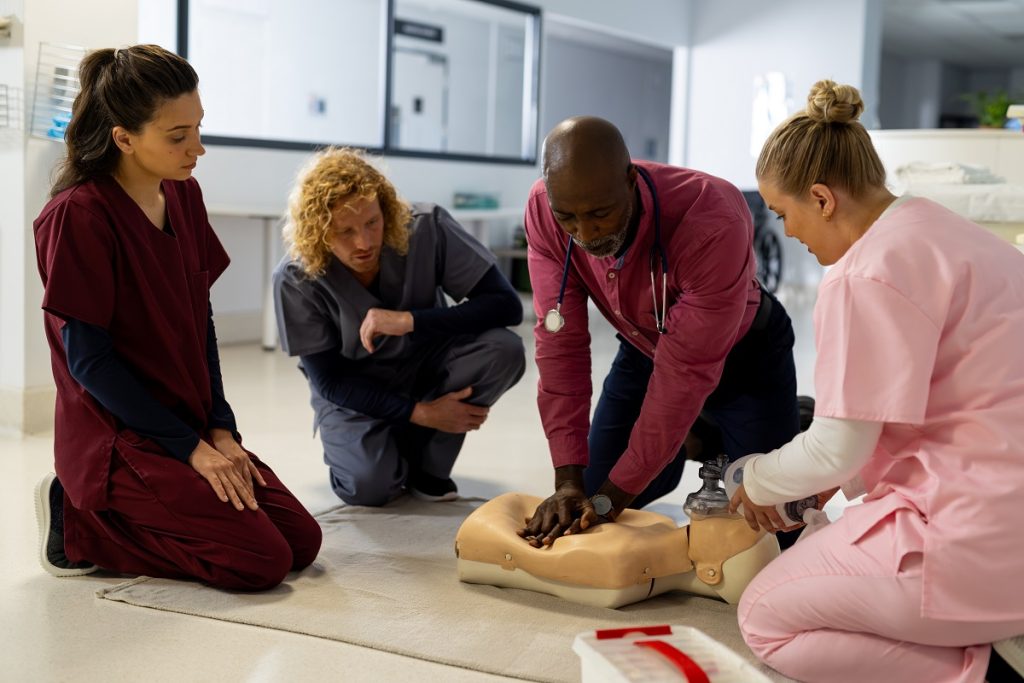
During training, learners repeat each skill until their technique becomes steady and consistent. This repetition removes the uncertainty that many people experience during sudden events. Students learn what normal breathing looks like, how to identify when CPR is required, and how to begin care even when bystanders are unsure of what to do. By using realistic manikins and scenario-based instruction, the training helps students move past fear of making mistakes and focus on performing the correct actions.
Confidence also comes from understanding the sequence of events. BLS training teaches why compressions start immediately, why AED pads must be placed in specific positions, and why certain steps cannot be delayed. When the reasoning behind these guidelines is clear, learners do not rely on memory alone—they rely on understanding. This is especially important during situations involving infants, children, or older adults, where responders must adjust their approach quickly.
Another factor that strengthens confidence is learning how to communicate while performing CPR. Students practice giving short, direct instructions, reporting what they observe, and coordinating with others. This preparation helps responders take control of a scene in a calm, organized manner, even when others are distressed. It also prepares them for environments where multiple trained individuals are present and decisions must be made quickly.
Finally, BLS training equips learners to act even when they are the only trained person available. Many emergencies occur in homes, small workplaces, or public locations where professional help may take several minutes to arrive. Knowing how to perform CPR, deliver rescue breaths, and operate an AED gives individuals the ability to begin lifesaving actions while emergency medical services are still on the way. This readiness is the purpose of the basic life support guidelines: to give people a clear and effective response plan that can be used anywhere.
Conditions Where BLS Skills Matter Most
Basic Life Support skills are used most often during sudden cardiac arrest, a condition where the heart stops pumping blood effectively. In these events, responders must act immediately by following the basic life support guidelines: check responsiveness, begin high-quality CPR, use an AED as soon as available, and continue care until advanced responders arrive. Early intervention is critical, and BLS ensures that trained individuals know the correct sequence and technique even when the situation develops without warning.
BLS is also essential during respiratory emergencies. These include events where a person is breathing poorly, struggling to maintain an open airway, or has stopped breathing altogether. Such situations can occur during allergic reactions, asthma incidents, trauma, or sudden illness. Responders trained in BLS understand how to support ventilation, provide rescue breaths when indicated, and recognize when breathing problems are progressing into cardiac arrest.
BLS skills are equally important during choking events, drowning incidents, and emergencies involving severe airway obstruction. In these scenarios, responders must identify the problem quickly and begin appropriate interventions—such as abdominal thrusts, back blows, or immediate CPR if the person becomes unresponsive. By applying the basic life support guidelines, responders can take direct, effective action during the first and most critical minutes of the emergency.
BLS Course Requirements by State or County
BLS course requirements differ by region and workplace, even though every course follows the same basic life support guidelines. In counties such as Frederick, Baltimore, and Rockville, healthcare systems commonly require students and staff to complete BLS training through an American Heart Association–authorized provider and pass an in-person skills evaluation. These requirements ensure that responders across hospitals, clinics, and educational programs apply consistent, validated techniques during emergencies.
A study revealed by the Maryland Department of Health shows that statewide EMS and clinical training standards depend on provider-level CPR and BLS competency to maintain operational readiness.
Certain counties also outline specific expectations for clinical students entering nursing, medical assisting, or allied health programs. Many institutions mandate active BLS certification before beginning any patient-contact rotation. Requirements may include renewal within the two-year period, documentation for credentialing, and proof of hands-on competency. These structures help educational programs align with state-level health and safety regulations.
For non-clinical roles, such as workplace responders, educators, or community safety teams, requirements may be more flexible but still recommend training from recognized sources. Regardless of county or employer, individuals should confirm whether their organization accepts classroom, hybrid, or online formats. Ensuring alignment with local expectations prevents delays in hiring, onboarding, or school enrollment.
How BLS Certification Supports Your Career
Basic Life Support certification is a requirement or strong advantage in many healthcare and safety-related fields. It shows employers that the individual can follow basic life support guidelines, respond without hesitation, and meet the standards expected in clinical and public safety environments. BLS also supports career development by demonstrating reliability and readiness for roles involving patient care or public responsibility.
How BLS Certification Helps Your Career
- Qualifies candidates for positions in hospitals, clinics, dental offices, long-term care, and EMS support roles.
- Meets enrollment requirements for nursing programs, medical assisting, allied health tracks, and clinical rotations.
- Strengthens a resume for competitive entry-level healthcare roles.
- Helps employees meet regulatory, licensing, or employer-mandated training standards.
- Provides a foundation for advanced training such as Advanced Cardiovascular Life Support (ACLS) and Pediatric Advanced Life Support (PALS).
- Demonstrates preparedness for workplace emergencies in corporate, education, sports, and childcare settings.
How to Prepare for Your BLS Course
Preparing for a Basic Life Support course is straightforward when the learner focuses on the essential skills required by the current resuscitation protocols. The goal is to arrive ready to practice CPR, use an AED, follow instructions efficiently, and complete the skills evaluation with confidence. A few simple steps can help students get the most out of their training session.
Steps to Prepare for Your BLS Class
- Review basic CPR steps in advance so the hands-on portion feels familiar.
- Watch examples of correct compressions and breaths, focusing on consistency and technique.
- Read the course description to understand what will be tested during the skills check.
- Wear comfortable clothing to allow full movement during CPR practice.
- Practice hand placement on a firm surface to build basic coordination.
- Arrive early to avoid missing key instructions during the opening skill demonstrations.
- Confirm course format requirements if you are attending a hybrid or renewal session.
These simple actions help students approach the course with clarity, allowing them to focus on technique and instructor feedback rather than on trying to learn steps for the first time during the evaluation.
When to Renew Your BLS Certification
BLS certification remains valid for two years, and renewal is required to stay aligned with the most BLS standards. Renewal ensures that responders maintain strong CPR technique, understand any updated recommendations, and remain eligible for clinical duties or workplace requirements. Keeping the certification current also prevents lapses that could delay onboarding, program enrollment, or employment verification.
Most professionals renew their certification several weeks before the expiration date. Renewal classes review essential steps, reinforce proper CPR sequence, and correct habits that may have drifted over time. Learners who renew regularly tend to perform more consistently during evaluations and respond more effectively during real emergencies. Employers in healthcare and public safety roles often verify BLS status as part of compliance and credentialing.
Individuals should check whether their state, employer, or academic program requires in-person testing or accepts hybrid renewal formats. The correct format depends on workplace standards and the level of responsibility expected from the responder.
How BLS Fits Into More Advanced Programs
Basic Life Support is the first step in the emergency care training pathway. Every advanced course relies on the skills, structure, and sequence outlined in the basic life support guidelines. Before a student can move into higher-level instruction, they must demonstrate consistent CPR performance, proper AED use, and the ability to coordinate with others during an emergency. Without this foundation, advanced coursework cannot be applied effectively.
Advanced Cardiovascular Life Support (ACLS) builds on BLS by introducing rhythm interpretation, airway management beyond basic methods, and clinical response algorithms used in hospitals and advanced care settings. Pediatric Advanced Life Support (PALS) expands BLS for pediatric emergencies, requiring precise assessment skills and age-specific interventions. Because both programs assume strong CPR and AED fundamentals, an active BLS certification is required for enrollment.
For individuals entering or advancing in healthcare, BLS establishes the baseline needed to participate in team-based emergency care, respond to clinical deterioration, and meet institutional credentialing requirements. Those who complete BLS consistently perform better in advanced courses because the essential techniques are already familiar and reliable.
Choosing Your Training Provider: What to Look For
Selecting the right BLS training provider is essential, especially for individuals working in healthcare or environments where emergency response is part of daily responsibility. A reliable provider must follow the basic life support guidelines, offer consistent hands-on evaluation, and maintain standards recognized by employers, credentialing programs, and state requirements. The training center you choose directly influences the clarity of instruction and the accuracy of your skills.
What to Consider When Selecting a BLS Provider
- Accreditation: The provider should be authorized to teach BLS using American Heart Association–aligned curriculum.
- Instructor qualifications: Courses should be taught by certified instructors with direct experience in emergency response or clinical practice.
- Skills evaluation: Hands-on assessment is essential; avoid providers that offer certification without in-person testing.
- Training equipment: Manikins, AED trainers, and ventilation devices should be modern and in proper working condition.
- Course format options: Classroom and hybrid formats should be available depending on employer or state requirements.
- Certification validity: The card must be accepted by hospitals, academic programs, and licensing boards.
- Location and scheduling: The center should provide flexible scheduling without compromising the quality of instruction.
Evaluating these factors ensures the learner receives accurate training, meets compliance standards, and can perform BLS reliably in real situations.
Training Standards at Comfi-Kare CPR
Comfi-Kare CPR meets all of the requirements outlined above. The center follows American Heart Association–aligned instruction, provides hands-on skills evaluation for every student, and uses updated manikins and AED trainers in all courses. Classes are led by certified instructors with experience in real emergency response, and the certification cards issued are accepted by hospitals, academic programs, and employers across the region. These standards ensure that every learner receives accurate training and is prepared to apply Basic Life Support skills responsibly and in full alignment with the basic life support guidelines.
Conclusion
Basic life support guidelines remain the foundation for an organized and effective response during medical emergencies. These guidelines give responders a clear sequence to follow, allowing them to recognize when CPR is needed, apply an AED correctly, and maintain care until advanced support arrives. A study revealed by the American Heart Association shows that early CPR and rapid defibrillation significantly improve outcomes in sudden cardiac arrest.
Maintaining BLS certification ensures that individuals stay aligned with current standards and perform each step with accuracy when urgency matters most. Whether a person works in healthcare, education, public safety, or another environment, being able to respond confidently is a responsibility that benefits patients, coworkers, and the community. Renewal, hands-on evaluation, and ongoing practice help keep these skills reliable and ready to use.
Comfi-Kare CPR follows all requirements outlined in this guide, using American Heart Association–aligned instruction, updated equipment, and instructor-led skills testing accepted by hospitals and academic programs. If you need certification for your job, a clinical program, or workplace compliance, contact Comfi-Kare CPR. Our team will help you select the correct course and ensure you meet the expectations for safe and effective response.
See our BLS training format comparison for a closer look at online, blended, and in-person certification.